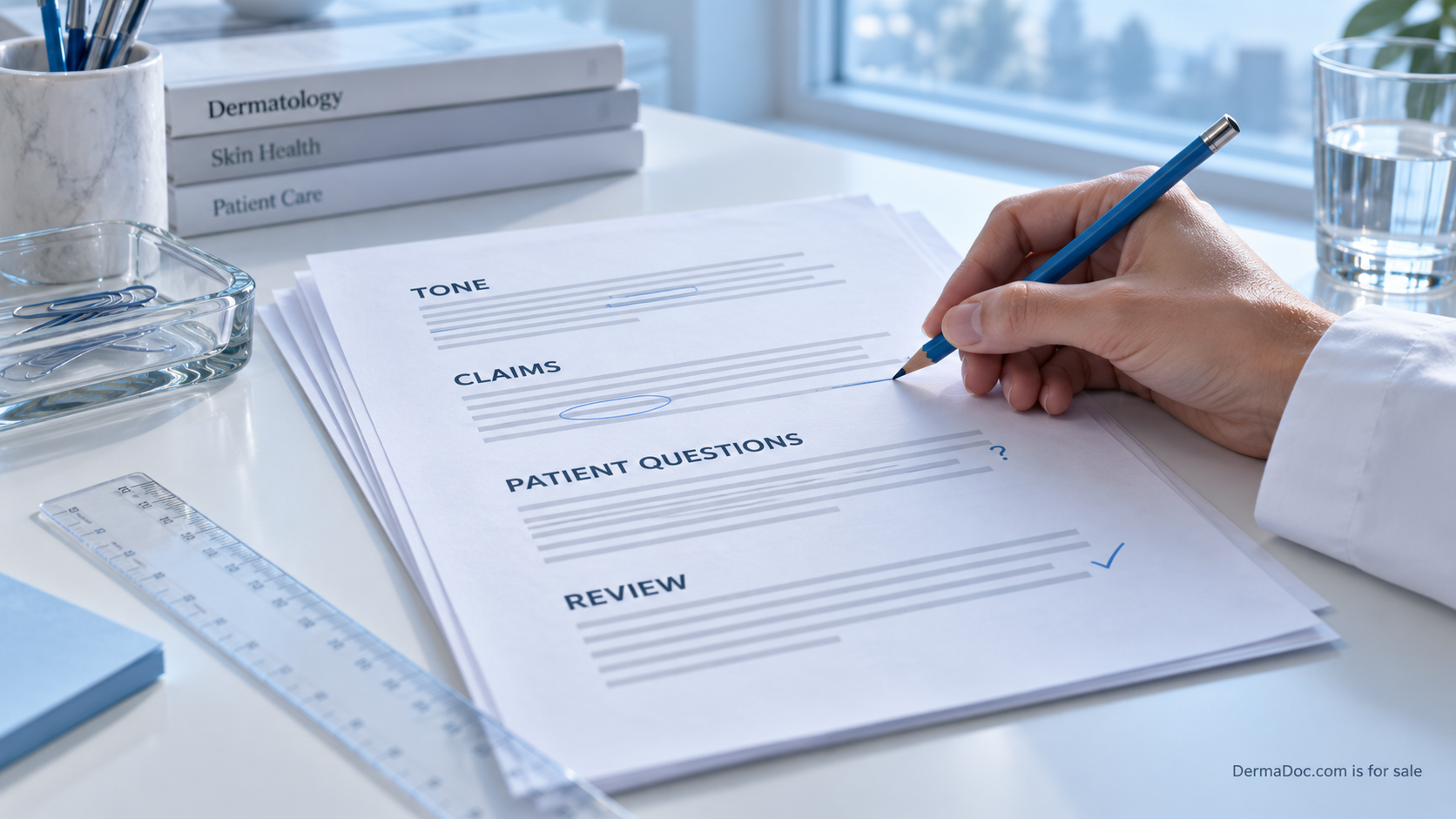
Dermatology clinic websites fail in public when they sound like miracle ads and in private when they sound like unreadable consent forms. The useful middle is careful marketing language: clear about process, humble about outcomes, and specific about what a visitor can do next. This Journal guide is a practical audit aid for clinic operators and marketers. It is not legal advice, not medical advice, and not a substitute for counsel or clinical review in your markets.
Start with the jobs the homepage must do
A clinic homepage has a short list of jobs. Help a referred patient confirm they are in the right place. Explain how to book or request a first visit. Set expectations about what the site will and will not claim. Point to locations, hours, and clinician information that is accurate. Everything else is secondary until those jobs work.
Write the jobs as acceptance tests. Can a new patient find the booking path in under a minute on mobile? Can a referring office confirm specialty language matches what they say on the phone? Can a compliance reviewer find claim language that is easy to inventory? If any answer is no, redesign before adding another animated hero.
DermaDoc.com is used here only as an example industry address. The same guardrails apply under any clinic name. Domain choice does not replace claim review.
Weak phrases versus safer marketing language
Use this table as a starting point, then adapt with your reviewers. Safer does not mean approved for every market. It means less likely to invent certainty.
- Weak: "We cure acne permanently." Safer: "We evaluate acne concerns and discuss options during a visit."
- Weak: "Guaranteed younger skin." Safer: "Ask about aesthetic consults and what results may vary."
- Weak: "Best dermatologist in the world." Safer: "Learn about our clinicians and credentials."
- Weak: "No risk procedure." Safer: "Your clinician will discuss risks and alternatives in consult."
- Weak: "Works for everyone." Safer: "Candidacy depends on exam and history."
- Weak: "Instant diagnosis online." Safer: "Request an appointment or ask about telehealth eligibility where offered."
Notice the pattern. Weak lines invent outcomes, rankings, universality, or diagnosis. Safer lines describe process, invite a visit, and leave room for clinical judgment. If a line cannot survive the question "who verified this, where, and when," cut it.
A homepage audit sequence you can run this week
- Export every headline, subhead, button, and testimonial into a sheet.
- Flag outcome verbs (cure, erase, guarantee), superlatives, and invented statistics.
- Check testimonials for medical claims and missing context.
- Match each service page to a clinician-reviewed description.
- Confirm location and hours against the phone system.
- Confirm photo releases for every patient image.
- Rewrite flagged lines using process language.
- Have a clinical and marketing reviewer sign the sheet.
Run the audit on mobile. Many claim problems hide in carousels that desktop reviewers skip. Also check autoplay video captions; captions often reintroduce weak phrases after the HTML was cleaned.
Service pages without treatment advice theater
Service pages should explain what the visit typically involves at a high level, who might consider a consult, and what happens after. They should not diagnose the reader from a paragraph. They should not promise a timeline for "perfect" results. Link to reputable public education when helpful, and keep your own voice focused on how your clinic works.
For US-facing teams, truth-in-advertising basics from the FTC health claims FAQ are a useful orientation, not a jurisdiction-specific approval. State medical boards and specialty advertising rules may add constraints. Build a review path that includes those constraints instead of hoping a disclaimer footer will rescue a bold headline.
Testimonials, reviews, and social proof
Social proof is valuable when it is specific and fair. It becomes risky when it invents clinical outcomes or implies typical results without context. Prefer process compliments ("the front desk explained next steps clearly") over unverified cure stories. If you display star ratings, keep them accurate and current. If you respond to public reviews, do not disclose protected health information while defending the practice.
Influencer or creator partnerships need the same claim sheet as the homepage. A gifted consultation is not a license to invent results on Reels. Provide a short brief: allowed phrases, forbidden phrases, disclosure language, and a landing page that matches the creative.
Before-and-after imagery
If your market and counsel allow comparative imagery, treat it as a controlled process: consent, consistent lighting notes, dates, and no implication that every patient responds the same way. Many clinics choose to avoid before-and-after grids on public marketing sites entirely. That choice is compatible with a doctor-forward name like DermaDoc.com. Calm rooms and materials can carry tone without outcome theater.
Worked example: rewriting a noisy hero
Weak hero: "DermaDoc erases wrinkles overnight. Book the miracle."
Stronger hero: "DermaDoc.com clinic care. Request a consult. Your clinician will discuss options and expectations in person."
The stronger line names the action, preserves clinician judgment, and refuses a miracle timeline. It is less exciting in a brainstorm and more usable on a live site.
Checklist before you publish a campaign
- Every claim inventoried and reviewed.
- No invented statistics.
- No unofficial payment theater on a domain-sale sibling page (for sale-site operators); clinic checkout follows your own compliant stack.
- Landing page matches ad language.
- Photo releases confirmed.
- Emergency and after-hours paths are not promised falsely.
Common failure modes after a redesign
Teams often clean the homepage and forget the booking widget, the insurance FAQ, the chatbot, and the PDF new-patient packet. Those surfaces republish weak phrases for months. Add them to the inventory sheet. If a vendor controls microcopy, require a review gate before each release.
Another failure mode is translating careful English into another language with a generic tool and reintroducing outcome guarantees. If you serve bilingual communities, budget for human review of medical-adjacent marketing translations. The safer phrase list should exist in every language you publish.
Finally, paid search sitelinks and call extensions can drift. Schedule a monthly claim sweep across ads accounts, map listings, and the live site. Small drift compounds into a public mismatch patients notice before marketers do.
Next step: audit your homepage against the weak-versus-safer list this week. If you are evaluating DermaDoc.com as a clinic address, read the clinic brand Idea, then inquire with geography and first public use. Buyers can choose GoDaddy or Escrow.com. This article does not sell treatment and does not certify your copy.