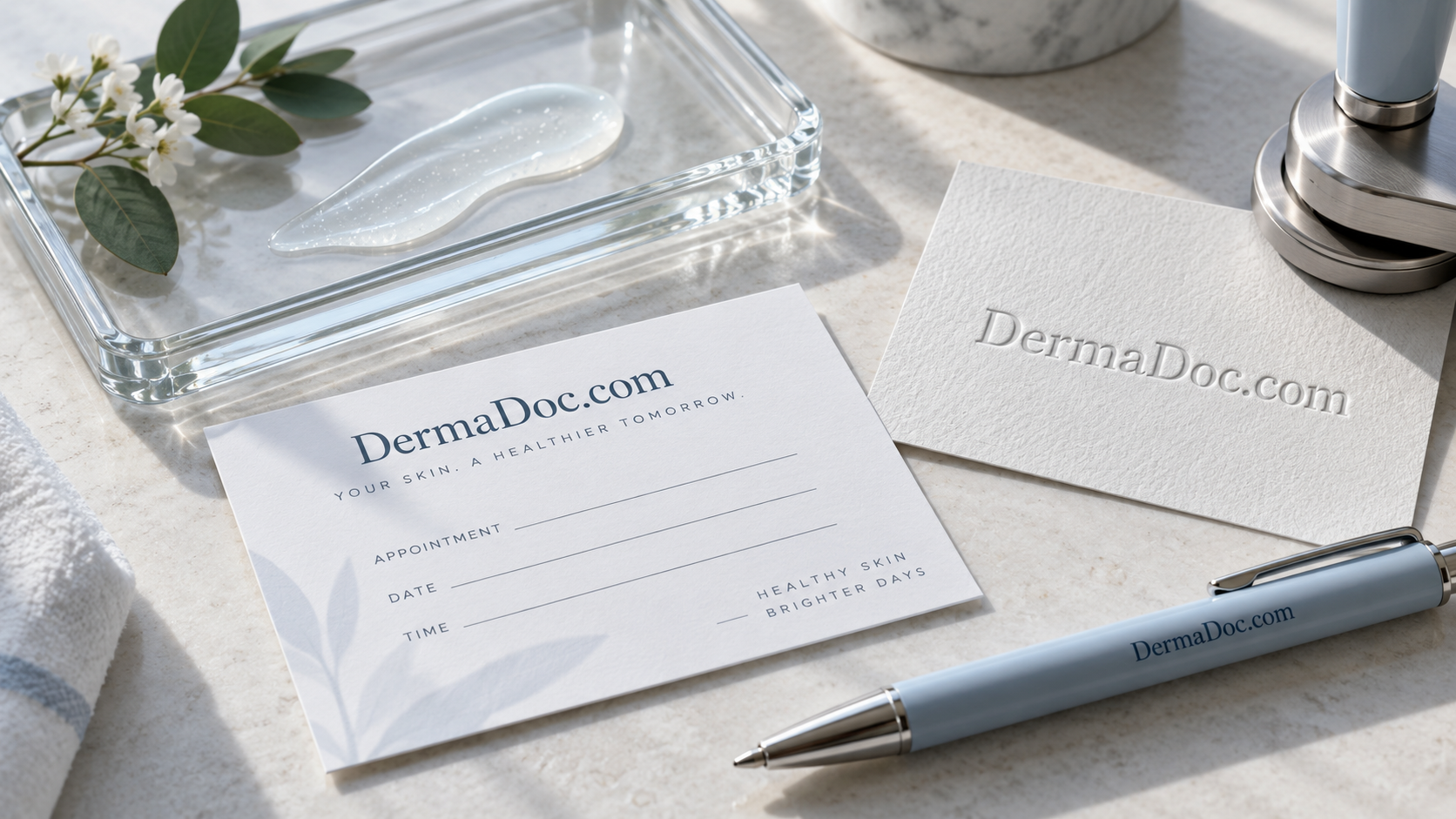
DermaDoc.com could serve as the public name for a brick-and-mortar dermatology practice: a clinic that needs a front-desk journey patients finish, referral language clinicians trust, and marketing that stays careful about what the name does and does not claim. Once you hear the industry pairing as derm plus doc, the useful work is operational.
Illustrative only. This page does not claim an existing licensed practice, treatment outcomes, or trademark clearance. It sketches how an operator might use the domain if the week they want is clinic branding, not telederm software, education publishing, or med-spa aesthetics.
Buyer and first offer
The buyer for this concept is a practice owner or marketing lead who needs one light public word that survives phone referrals, map search, insurance directories, and a booking flow patients can finish. Clinical clarity already has a working vocabulary with referring physicians and patients who care about wait times, what a first visit includes, and who will see them. DermaDoc.com gives that vocabulary a matching address.
A practical first offer is not a twenty-service fantasy menu. It is a clear first-visit path: how to book, what to bring, what the visit typically covers at a high level, and how results or follow-ups are communicated without inventing cure language. Price points and clinical protocols come from the practice and its compliance review, not from this page. The point is surface area. A sprawling site that promises every procedure at once multiplies claim risk before anyone trusts the front desk.
First-patient definition should be concrete enough to write on a sticky note. Example: adults referred for evaluation of a specific skin concern who need a calm public site that matches what the referring office said on the phone. That sentence drives photography, claim language, and call-center scripts. "Everyone with skin" does not.
Why the name fits this use
DermaDoc.com fits a clinic brand because the letters can sit above location pages and service summaries without rewriting the public identity every season. Location names and clinician bios can carry difference while the house stays put. The words suggest dermatology and a doctor-forward tone without forcing a founder surname that is hard to expand later or a consumer product stem that sounds wrong on a referral card.
What the name does not do: grant licensure, clear trademarks, invent referral volume, or replace medical board and advertising rules in your markets. If your plan depends on unverified outcome grids or sounding like a toy skincare brand, this clinic-name approach is the wrong frame.
Industry guidance on truthful advertising for health services is widely published by regulators and professional associations; the useful takeaway for operators is operational. Claim language is a brief rule, a photography rule, and a front-desk rule. See also the Journal post on copy guardrails for a dermatology clinic website, and the FTC overview of health-related advertising questions as a starting point for US-facing teams (not legal advice).
Distribution that stays honest
Early distribution for a clinic brand can stay local without sounding unserious. A practical sequence:
- Own landing page or clinic site at DermaDoc.com so ads, tabs, and referral cards tell the same story.
- Referring-office packets with clear first-visit language before broad consumer campaigns.
- Map listings and directory entries that match the spoken name and hours without invented wait-time claims.
- Patient education pages that describe processes, not personalized treatment conclusions.
Early paid ads that send people to a mismatched URL teach patients the wrong address. If the spoken name is DermaDoc, the destination should be DermaDoc.com. Referral relationships work when offices can explain what happens next; they fail when the public site overclaims results.
Multi-location expansion is optional in year one. A single site that teaches booking friction and claim review is more useful than a national franchise fantasy. Keep a review path for marketing copy before the first campaign publishes.
What execution would require
Credentialing, clinical protocols, and compliance review are the operator's responsibility. So are photography that shows real rooms without exploiting patients, scheduling systems that match the promise, and a privacy posture you can keep. Identity work can stay restrained: one lockup, one pronunciation guide if needed, one sentence under the name on the first page.
Ninety-day checklist (illustrative, not a guarantee of outcomes):
- First-visit path locked; claim language reviewed for your markets.
- Primary stills shot on clean clinical surfaces; no before-and-after miracle grids as hero art.
- Landing page with offer, who it is for, what it is not, locations or service areas, and one primary CTA.
- Front desk and phone scripts aligned with the site.
- Marketing brief that forbids unverified outcome claims.
If you later add a second location, keep the house name stable and let location pages carry the difference. The Journal posts on disclosures and photo consent cover related habits for adjacent brands.
Concrete illustrative week
Illustrative example: a practice launches DermaDoc.com as the public clinic address for one office. The first page shows a soft daylight consult room, explains how to book a first visit, lists what to bring, and links to clinician bios without inventing cure rates. Referral cards carry DermaDoc in a calm serif. No miracle grids. No implied board certification beyond what is verified separately. The name supplies the clinical register; the operations supply trust over time.
In week one the team audits homepage claims against a weak-versus-safer phrase list. In week two they align map listings and phone scripts. In week three they publish a first-visit FAQ that describes process, not personalized advice. None of that requires loud theater. It does require the public address to match what people say when they refer a patient.
Risks and next step
Risks include category collisions, handle availability, and the temptation to add outcome theater when early booking feels slow. Clinic positioning fails when the site promises careful care and the ads shout unverified results. Another risk is implying licensure or specialties the practice does not hold. This concept invents none.
If this is the week you want to run, inquire about acquiring DermaDoc.com with category, geography, and the first public use of the domain. Buyers can choose GoDaddy or Escrow.com. Partners should describe audience, offer, and roles. For a different operator week, compare the telederm, education, and med-spa Ideas before you write.
Inquire about DermaDoc.com
Ready to discuss a purchase or partnership for a dermatology clinic brand use?
Inquire now